

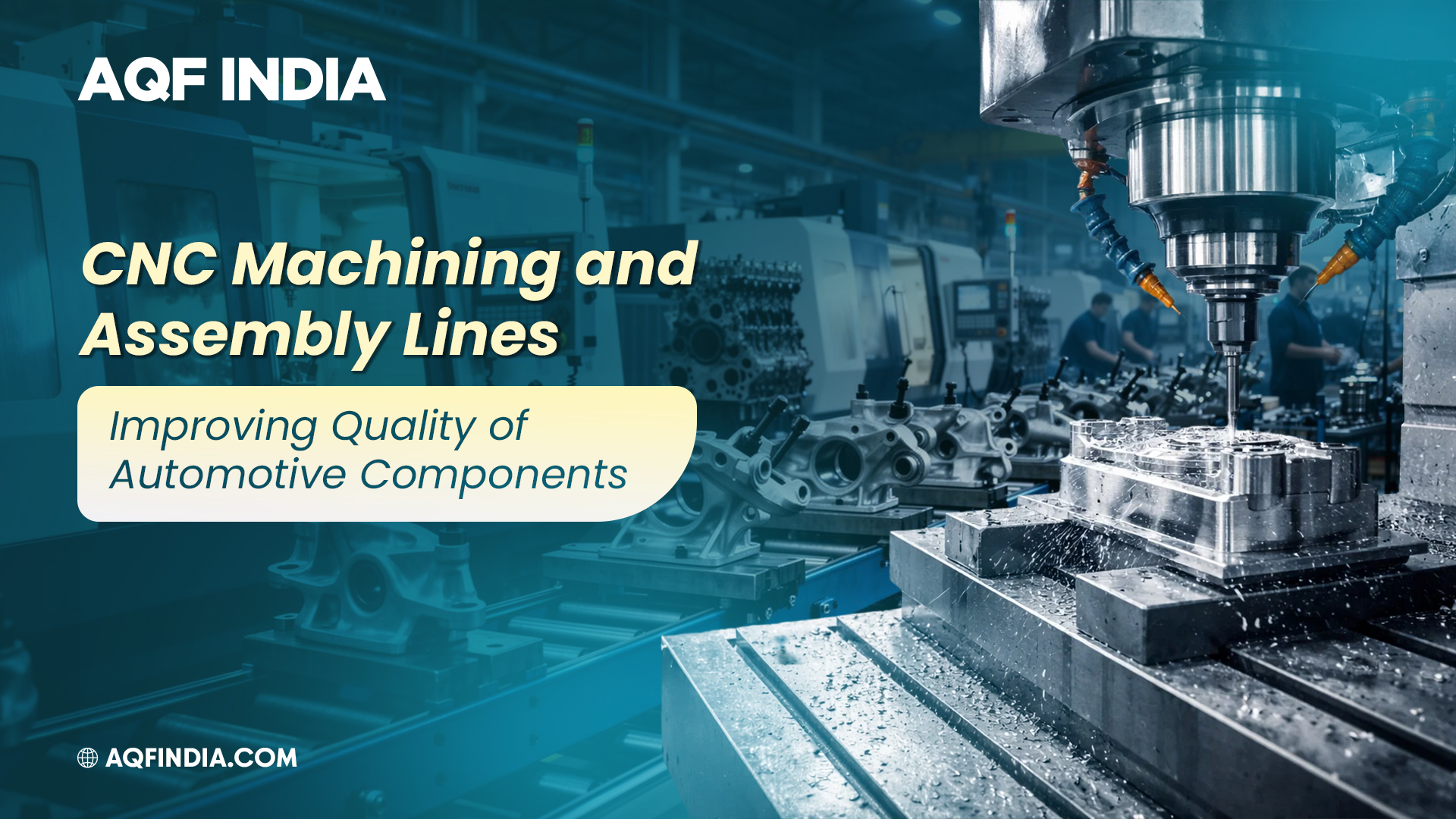
- Automotive precision components eliminate fit failures before assembly begins.
- CNC machining cuts human error down to near-zero tolerances.
- Consistent toolpaths keep every assembly line batch identical.
- Coimbatore’s manufacturing cluster gives OEMs a strategic supply advantage.
- Process integration, from raw material to finished part, is where quality is won or lost.
Why Quality Starts Before the Assembly Line
Many would think that the quality check is done on the assembly line. However, we believe that’s actually a missed opportunity.
At the point when a component goes for assembly, its history is mostly determined by the stage of machining, the selection of materials, and retaining or failing to keep the tolerances. Our whole work is centered around understanding and living this scenario.
If automotive component machining goes well, then your assembly line is more productive with less rework and lower rejection rates. On the other hand, if things go wrong, every one of the subsequent operations suffers.
What CNC Machining Actually Changes on an Automotive Line
Here’s a direct breakdown of where CNC machining impacts automotive component quality:
| Quality Factor | Traditional Machining | CNC Machining |
| Dimensional accuracy | ±0.1 mm (variable) | ±0.005 mm (consistent) |
| Batch-to-batch consistency | Operator-dependent | Program-controlled |
| Surface finish | Inconsistent | Repeatable Ra values |
| Rework rate | 8–12% (industry avg.) | Under 2% |
| Cycle time per part | Higher, variable | Optimised, fixed |
These are not abstract ideas. These are the reasons why the automotive sector in Coimbatore, India, is approaching manufacturers who can keep very tight specifications throughout large volumes, not only in samples.
The Coimbatore Advantage: Precision at Scale
The reason that the automotive industry prefers the supply network to be from this area is quite logical. The automotive companies in Coimbatore are supported by a vast base of the finest manufacturing capabilities, the sourcing of the right tools, and an abundance of skilled engineers. All these are located quite closely.
For OEMs and Tier-1 Suppliers, this translates to:
- Shorter Lead Times – Local sourcing cuts transit delays.
- Faster Iteration – Design changes move from CAD to component quickly.
- Cost Efficiency – Proximity reduces logistics overhead.
- Quality Visibility – Easier to audit and collaborate with nearby vendors.
We run through this setup daily, and the best performance is a combined product of a good site and a skilled workforce.
How We Approach Assembly Line Quality at AQF India
At our manufacturing company, we don’t separate the discussion of the quality of the parts produced by the CNC machine from the preparation of the assembly line. It is an integrated development.
Stage 1: Component Design Review
We analyze every part for the feasibility of machining and how it will be assembled before it is made.
Stage 2: CNC Machining with Process Controls
Using multi-axis CNC machining, we achieve the actual precision required for the assembly, not the ones that are nice to look at but are not really the right ones.
Stage 3: In-Process Inspection
We check the accuracy of parts during the production phase, not only afterwards. This prevents the rejection of a whole lot of defective parts.
Stage 4: Assembly Simulation & Fit Verification
Very important parts are checked for their ability to be fitted under conditions that actually happen on an assembly line.
Stage 5: Final QC & Dispatch
Only parts that have been measured, have a clean surface, and are functional are taken from the warehouse.
Where Most CNC Manufacturers Fall Short
Being a CNC machining manufacturer means more than running programs on machines. The gap between average and excellent comes down to three things most manufacturers overlook:
1. Fixturing Discipline
Poor fixtures cause positional errors that no amount of machine accuracy can fix.
2. Tool Wear Monitoring
Worn tools drift tolerances gradually, and batch failures happens before anyone notices.
3. Documentation Culture
Without traceability, quality is invisible. You can’t improve what you can’t measure.
These aren’t complex fixes. They’re disciplined habits. And they’re exactly what separates components that pass first-time from those that create assembly line stoppages.
The Numbers That Matter to Automotive OEMs
| Metric | Impact of CNC Precision |
| First-pass yield | Increases by 15–25% |
| Assembly line downtime | Reduces significantly with consistent parts |
| Component rejection | Drops when tolerance band is tightened |
| Supplier qualification time | Shorter with documented process controls |
| Total cost of quality | Lower over full production lifecycle |
Final Thought
The quality of the component is determined not only by the machining process but also by the material used, design, and finishing treatment given to the parts. Choosing your supplier wisely plays a big part in determining the quality of your assembly line.
We’ve built our work around that belief. As a trusted partner for automotive companies in Coimbatore and beyond, AQF India brings together precision machining capability and a quality-first process culture, so every automotive precision component we deliver is assembly-ready from the first piece to the last.
FAQs
- How does CNC machining improve automotive component quality?
- CNC machining delivers consistent tolerances, reduces human error, and ensures every part is assembly-ready batch after batch.
- Why source automotive components from manufacturers in Coimbatore?
- Coimbatore’s precision manufacturing cluster means faster turnaround, easier collaboration, and supply chain reliability for automotive OEMs.
- What makes AQF India different from other CNC machining manufacturers?
- We combine in-process inspection, tight tolerance machining, and full traceability so quality is built in, not checked at the end.