

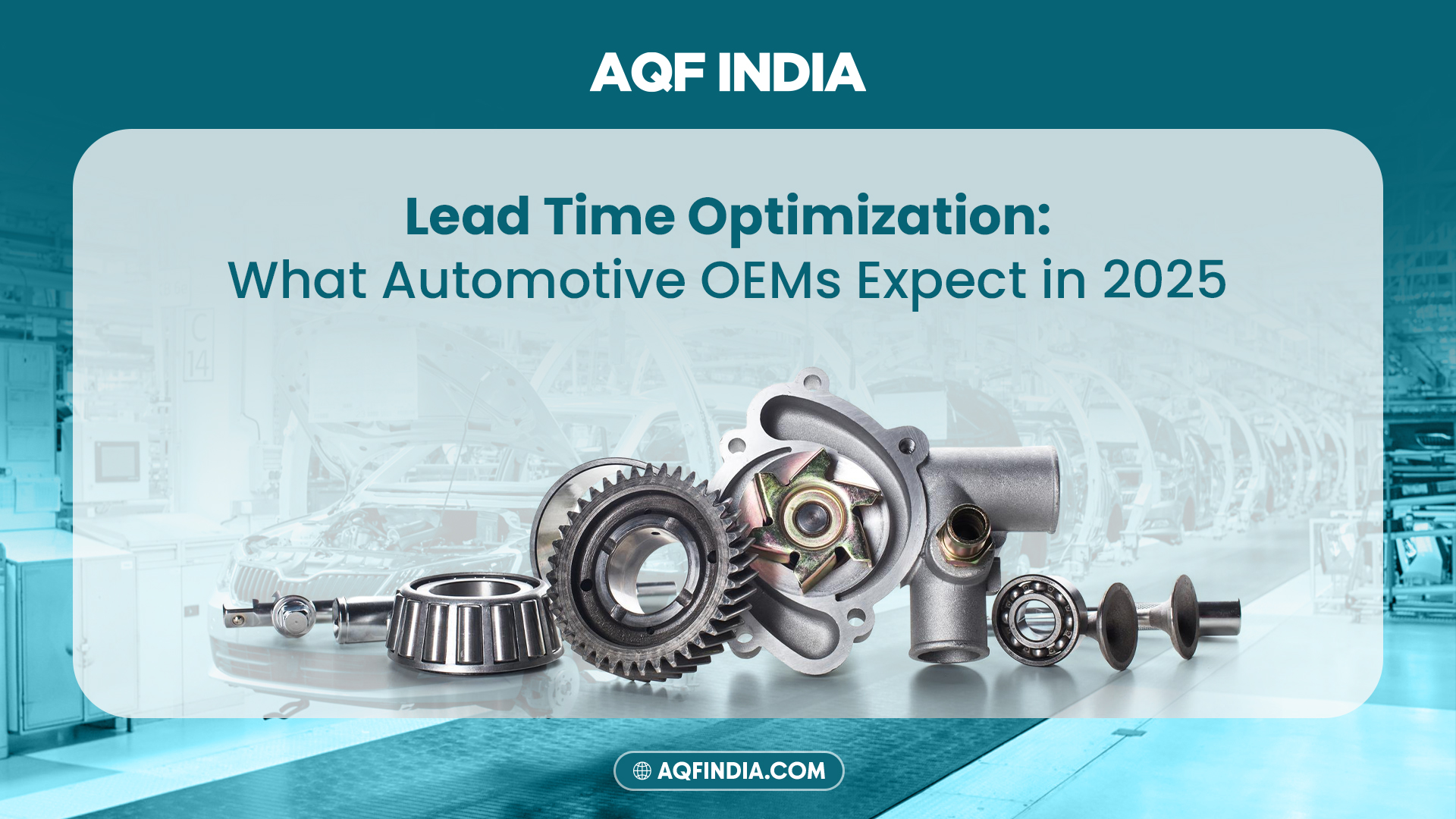
OEM lead time performance is considered as a defining benchmark of competitiveness throughout the automotive supply chain. This is evident in the shift away from accepting delays caused by inflexible production models. Automakers now expect every manufacturer in their supply chain to deliver speed, predictability and disciplined execution.
With the increasing focus on cost efficiencies, maintaining production continuity and shortening model life cycles, the ability to compress lead times while maintaining the highest quality will be a key differentiator for suppliers doing business in India’s automotive market.
Integrating Digital Tools to Shrink Lead Time
Digital integration forms the foundation of lead time optimization. The IoT, artificial intelligence planning tools and advanced analytics, which are being utilized by supply chain ecosystems to eliminate bottlenecks, optimize schedule and allow for on-demand dynamic scheduling. This allows suppliers to simplify workflows, anticipate and mitigate delays and also automatically synchronize schedules with automotive original equipment manufacturers. Results include tighter planning-production-delivery alignment and reduced excess inventory.
Localization and Automotive Supply Chain Resilience
In India’s automobile sector, localization drives sustainable lead time cuts. Automotive OEMs favor suppliers near manufacturing hubs. Shorter distances plus optimized multi-modal logistics ensure faster, predictable delivery. Infrastructure and policy support boost connectivity, helping automobile component manufacturers sustain stable lead times amidst global volatility.
Collective Forecasting and Planning
In 2026, collaboration beats solo efforts in lead time optimization leading buyers to demand transparent, data-driven supplier engagement. CPFR models share early, accurate demand signals, aligning capacity, resources and mitigating stock risks. Digital systems enable quick responses to schedule changes or demand shifts.
Quality Consistency within Optimized Timelines
Speed isn’t enough because automotive original equipment manufacturers require unwavering quality, compliance and accuracy. For automobile component manufacturers, this means embedding controls across production. Automation, real-time monitoring and in-process inspections catch deviations early, preventing disruptions in accelerated timelines or downstream assembly.
Conclusion: Partnering for Agile Lead Times
Lead time optimization differentiates success in the automobile sector in India. By advancing digital planning, collaboration and quality integration, we at AQF India enable automotive OEMs to gain continuity and agility. Connect with our experienced team to boost reduced lead times and supply chain performance ahead.
Contact AQF India’s team today to audit your lead times and unlock agility!