

- A sub-assembly is only as reliable as the weakest part inside it.
- Auto-machining requires not only accuracy in cutting, but repeatable accuracy, batch after batch.
- A well-run CNC machine shop in Coimbatore treats every sub-assembly as a system, not a stack of individual parts.
- The right precision component manufacturer incorporates quality checks into each stage, including the final stage.
Why Sub-Assemblies Are Harder to Get Right Than Single Parts
A single machined component only has to satisfy its own drawing. A sub-assembly has to satisfy every part working together under load, under heat, over thousands of duty cycles. One part that’s slightly out of tolerance can throw off the whole unit, even if it passed inspection on its own.
This is where automotive machining stops being just about cutting metal and starts being about engineering a system. And that’s why manufacturers choosing a supplier for sub-assemblies look far beyond who owns the largest machine.
Stage 1: Reading the Drawing Before Touching the Material
Each sub-assembly begins with the print dimensions, tolerances, surface finish, and mating requirements. Engineers create a blueprint of how each part will work with the other parts after they are put together before the first part is manufactured. Failing to do this is how tolerance stack-up issues are created from the outset.
Stage 2: Material Selection Matched to Function
Not every part in a sub-assembly needs the same material or hardness. Shafts, housings, and fasteners often carry different load and wear requirements. A precision component manufacturer selects material grade based on what each part will actually experience in service, not just what’s easiest to machine.
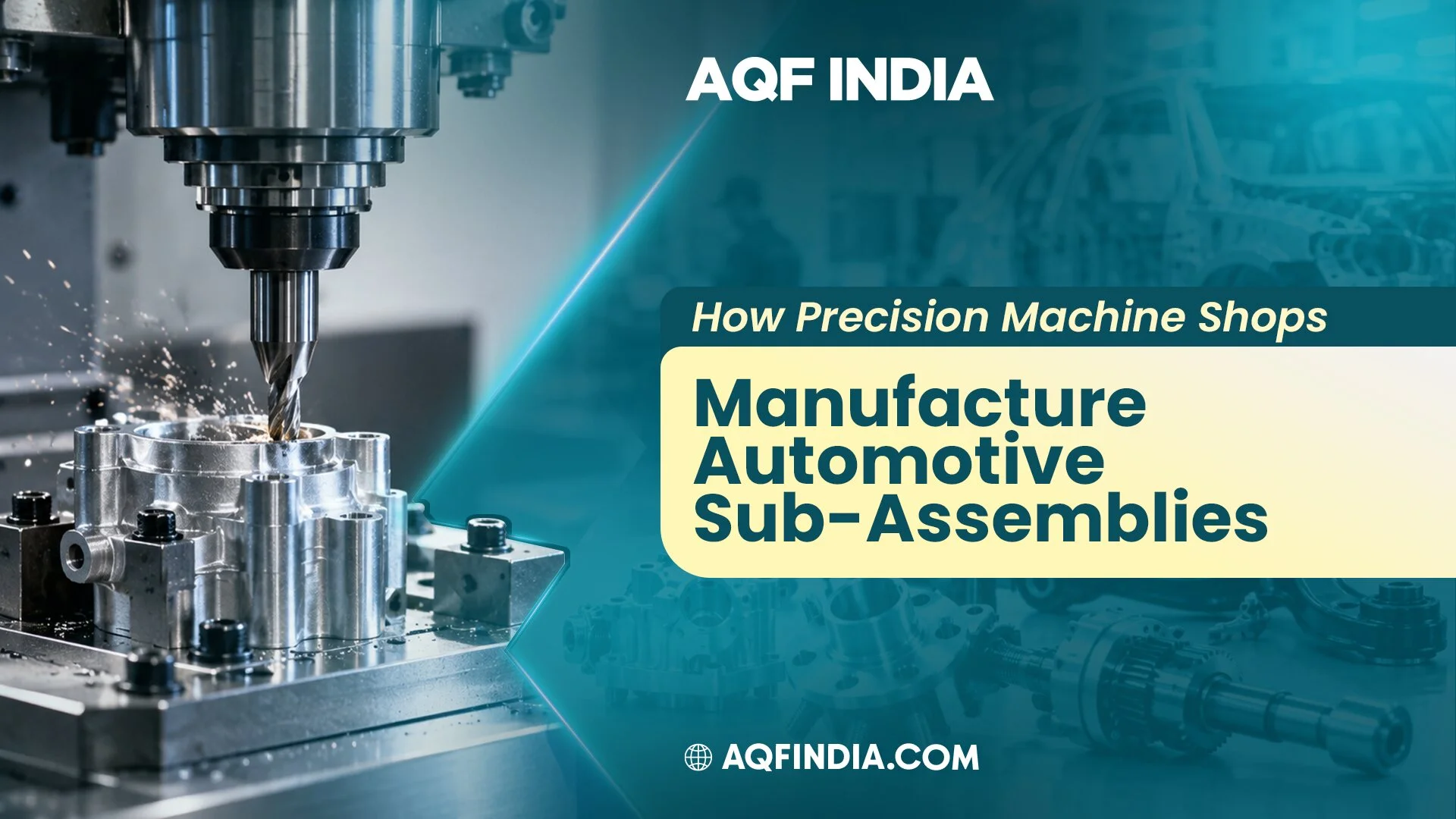
Stage 3: Multi-Axis CNC Machining for Consistent Accuracy
A good CNC machine shop in Coimbatore gets its reputation here. Multi-axis CNC setups maintain tight tolerances over complex geometries with one setup rather than repositioning the part multiple times, which results in the handling errors that are associated with multiple setups. It is this consistency that ensures that sub-assemblies fit together the same way each and every time when they have multiple mating surfaces.
ALSO CHECK – CNC Machining and Assembly Lines: Improving Quality of Automotive Components
Stage 4: In-Process Inspection, Not Just Final Checks
Waiting until final inspection to catch a problem is expensive, because by then several components may already be affected. Measurement checkpoints built into the machining cycle catch drift early before it turns into a batch of parts that don’t fit together.
Stage 5: Fitment and Functional Testing
Before a sub-assembly ships, components are test-fitted and, where required, run through functional checks, torque tests, rotation checks, leak tests, depending on the application. This stage confirms what the drawings promised: that the parts don’t just meet tolerance individually, they perform as a unit.
Stage 6: Traceability and Final Dispatch
Every batch carries a documented history: material certificates, inspection records, process parameters. A question that occurs six months later can be followed back by a precision component manufacturer to the specific machine, operator, and batch. For buyers who are sourcing sub-assemblies, what does this mean ? So what does this mean for buyers who are sourcing sub-assemblies?
What This Means for Buyers Sourcing Sub-Assemblies
| What to Look For | Why It Matters |
| Multi-axis CNC capability | Fewer repositioning errors across complex geometries |
| In-process inspection | Problems caught early, not after a full batch is cut |
| Documented traceability | Faster root-cause analysis if an issue surfaces later |
| Functional testing before dispatch | Confirms the assembly performs, not just individual parts |
Final Thought
Automotive machining for sub-assemblies isn’t about one machine doing one job well. It’s about a system of checks from the drawing stage to final dispatch that makes sure every part fits, functions, and holds up the way it’s supposed to.
At AQF India, our CNC machine shop in Coimbatore is based on this very discipline to provide multi-axis machining, in-process inspection, and full batch traceability for each sub-assembly we deliver. If you need parts that fit the first time on your production line, team up with a precision component manufacturer who believes sub-assembly quality is a system, not a checklist.
Frequently Asked Questions (FAQs)
- Why is it that the accuracy of an automotive sub-assembly is more difficult to achieve than with a single component?
Because tolerances stack up across multiple parts. A part that passes inspection alone can still throw off the whole assembly once it’s mated to others. - What makes a CNC machine shop in Coimbatore reliable for sub-assembly work?
Multi-axis machining capability, in-process inspection, and documented traceability, so every part in the assembly is accounted for, not just checked at the end. - How does a precision component manufacturer prevent tolerance stack-up in sub-assemblies?
By designing tolerance limits at the assembly level from the start, not just per individual part, and verifying fitment through functional testing before dispatch.