


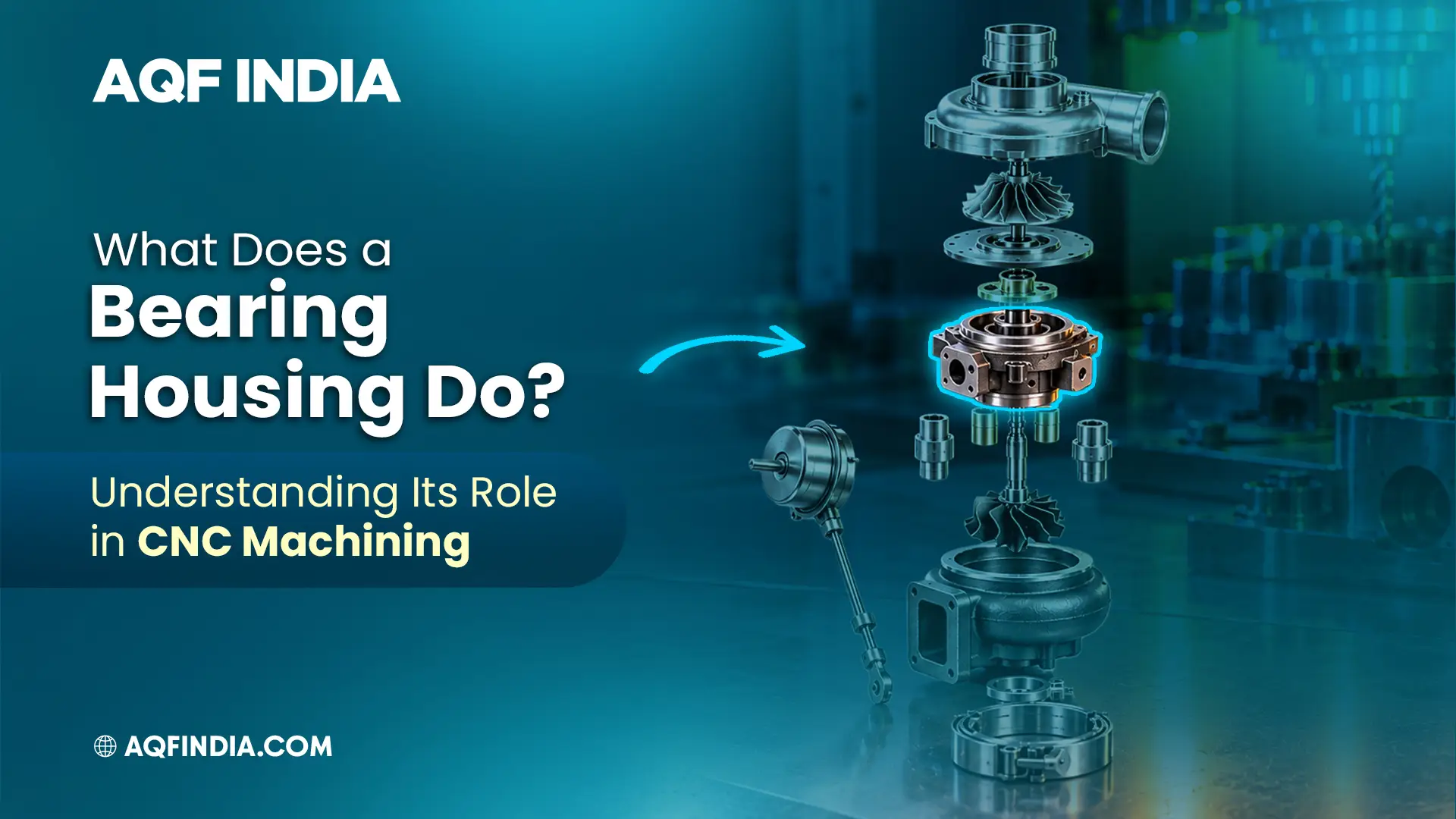
- Hold the bearing in place. That’s the whole job, and it’s harder than it sounds.
- A few microns off in the bore, and the bearing is gone within months.
- Bearing housing types differ. The purpose doesn’t: support, align, protect.
- Bearing conveyor, gearbox, pump. Whichever it is, the housing decides how long it runs.
- Choose the wrong bearing housing manufacturer, and you’ll pay for it in the field.
Why the Bearing Housing Gets Overlooked
The first piece of equipment that comes to mind when a machine is making a noise is always the bearing. Fair enough. You replace it, start the machine again and the noise returns in a few weeks. It’s at that point that someone takes a look at the housing and sees that it’s slightly out of round, or two seats don’t match up.
The shaft holds the bearing from inside. The bearing housing holds it from outside. Get that outer support wrong, and even a very good bearing will run hot, wear on one side, and give up early.
What a Bearing Housing Does
The primary task is to keep the bearing from moving to cause the shaft to wobble. It also absorbs some of the load as it goes along, repels dust and water, traps grease, and expels a little heat. The first two are remembered. The past three are forgotten until a bearing is cooked in a dusty plant.
Bearing Housing Types You’ll Run Into
Start with the one everybody has seen: the pillow block (plummer block, if you’re being formal). A base with feet, bolted down, bearing sitting on top. You’ll find it on fans, pumps, and plain shafts.
Need the bearing inside a machine wall? That’s a flanged housing, bolted straight onto a flat face.
Heavy machinery usually gets split housing. Two halves, so you can open it without pulling the shaft out. That alone can save a full day of dismantling.
And on a bearing conveyor, you’ll find take-up units. They slide, so you can tension the belt without tearing the frame apart.
Where CNC Machining Comes In
A casting gives the housing its shape. It doesn’t give it accuracy. That part comes from the machine, and these are the features worth watching:
- Bore diameter, held to a tight fit class (the H7 range is common for a fixed outer ring)
- Bore roundness, so the bearing isn’t squeezed out of shape
- Squareness of the shoulder the bearing sits against
- Flatness of the mounting face, so tightening the bolts doesn’t pull the bore out of shape
- When one shaft is aligned through two housings, it is known as Alignment between bores.
Visualize walking with a pebble in the shoe. You’re allowed to walk, but each step is a little misaligned, and by nightfall something is hurting. A misaligned bore does the same to a bearing, each rotation.
If too tight, the bearing will be compressed, lose clearance, and run hot. If it’s too loose, the outer ring begins to creep in through the inner wall of the housing, causing the bore to wear over time. The window of opportunity is very limited. We’re talking microns.
Choosing a Bearing Housing Manufacturer
Same drawing, two shops, two different housings. It usually comes down to the bores.
So what should you look for? A shop that cuts the critical bores in one setup, so they stay concentric. One that measures during machining, not only at the end. And one that knows its material, because cast iron and SG iron don’t cut the same way, and a bore can drift later if the casting carries internal stress.
At AQF India, the foundry and the machine shop are part of the same company, so casting and machining are planned together. Our CNC machine shop finishes the bores and our in-house lab checks them.
Shafts and housings go hand in hand, by the way. Here’s the other half of the story: The Role of Shafts in Mechanical Systems.
Final Thoughts
Nobody thinks about the housing until it fails. By then the damage has spread, and the repair bill is bigger than the part ever cost.
Fix it where it’s cheap: at the machining stage. If you’re sourcing for a conveyor, a drivetrain or a custom machine, ask your manufacturer how they hold the bore. The answer tells you a lot. Send your drawing to AQF India and let’s talk.
FAQs
1.What is the main function of a bearing housing?
It is used to position the bearing in a precise manner to ensure the shaft is running true, it transfers the load from the shaft to the machine frame and it prevents the bearing from being contaminated with dirt, moisture or loss of lubricant.
2.What are the different types of bearing housing?
Pillow blocks, flanged housings, split housings and take-up units. The right one will be determined by the mounting as well as the frequency of servicing and if position is to be adjustable.
3.What is the criteria to consider before picking the manufacturer of bearing housing?
Query if the critical bores are cut in one operation; if they are checked during the cutting operation, not just at the end; if the casting material is tested prior to cutting the bore.