

- Dimensional discrepancies lead to costly repairs and a poor fit.
- Surface flaws cause abrupt failure, wear, and noise.
- Strength and dependability are impacted by inconsistent material hardness.
- Burrs compromise safety, sealing, and assembly performance.
- Batch-to-batch variation demands stronger process control.
Why Quality Failures in Automotive Production Are Getting Costlier
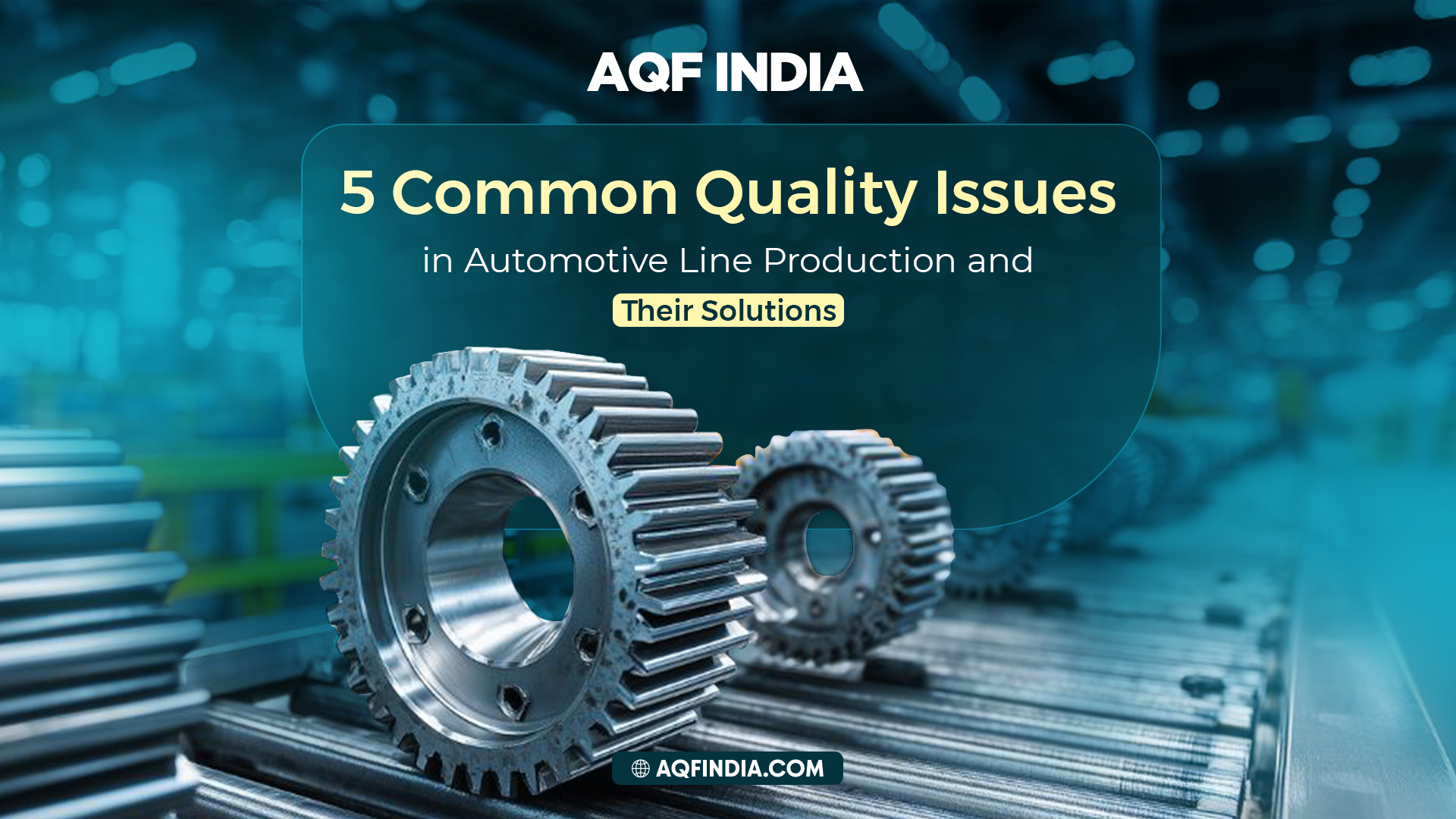
The margin for error in manufacturing automobiles is rapidly decreasing. A single faulty batch can stop an entire OEM line due to increased torque requirements, stricter tolerances, and quicker assembly cycles. We witness these challenges not from the external perspective; we deal with them firsthand, each production shift.
Here’s what actually goes wrong, and what the fix looks like.
1. Dimensional Deviation: The Silent Line Stopper
The dimensions are quietly pushed out of specification by fixture drift, tool wear, and thermal expansion throughout the machining process. By the time inspection catches it, a full batch is compromised.
Fix: Live in-process gauging, not just end-of-line CMM checks. Catching drift at the cut saves the batch.
2. Surface Finish Failures: Looks Fine, Fails Fast
Poor Ra (Roughness) values on mating surfaces create micro-abrasion zones. These looks are acceptable visually but fail under dynamic load, a classic issue with automotive precision components that only shows up after assembly.
Fix: Consistent cutting parameters, coolant pressure monitoring, and tool change schedules tied to actual wear data, not guesswork.
3. Material Hardness Inconsistency: The Hidden Risk
Variation in raw material certification doesn’t always mean variation in actual hardness. Heat treatment variables and batch-level composition shifts create components that pass visual inspection but fail fatigue testing.
Fix: Incoming material verification with hardness mapping across the billet, not just at the surface.
4. Burr Formation: Small Edge, Big Problem
Bore entry, cross-hole, and threaded aspect voids result in assembly damage, sealing failures, and safety issues. Burr development is predicted in high-volume production, making it avoidable.
Fix: Instead of relying solely on operator assessment, the process drawing incorporates optimized entry/exit geometry, targeted deburring stations, and edge break standards.
5. Batch-to-Batch Variation: The Inspection Trap
Most manufacturers inspect their way out of variation. That approach costs time and misses root causes. As a trusted automotive component manufacturer, we’ve learned that variation control must happen at the process level, fixturing, clamping force, and spindle load monitoring.
Fix: SPC (Statistical Process Control) on critical dimensions per batch, not per quarter. Trend data tells you where the process is drifting before the part goes out of spec.
Final Thought
Quality in automotive production isn’t a final gate; it’s a process discipline. At AQF India, we treat each one of these five failure points as a systemic problem, not a one-off rejection. If you’re sourcing automotive precision components and need a manufacturing partner who controls quality at the source, not just at the exit, let’s talk.
Connect with AQF India today and get components that clear the line, every time.