

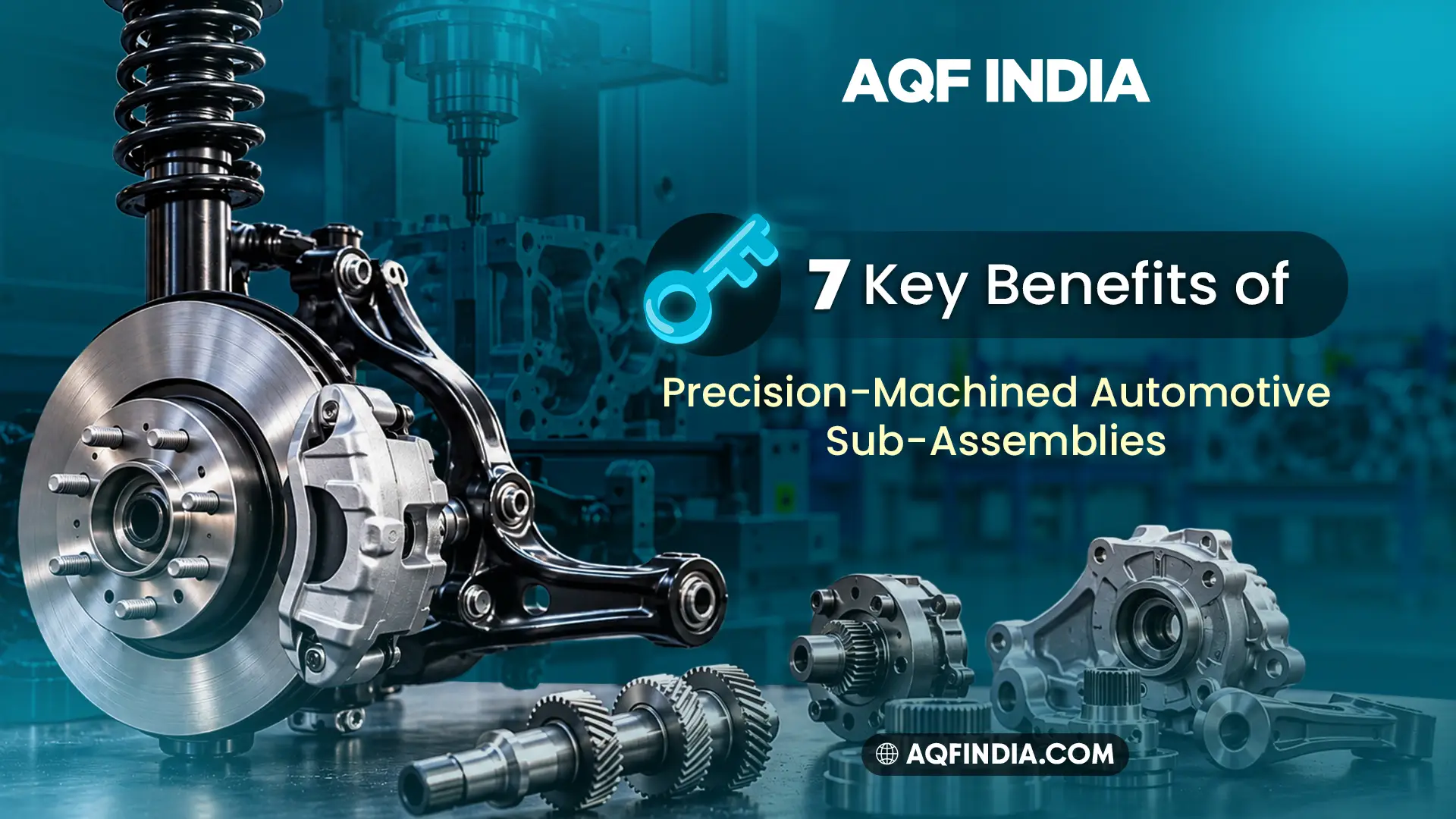
- One precision component manufacturer. One point of accountability.
- Precision-machined components that fit right the first time: less rework, less cost.
- Fewer vendors. Fewer delays. Fewer surprises on your line.
- Find a lower total price, despite the higher unit price.
Why This Shift Is Worth Understanding
There was a time when handling assembly in-house made sense; you kept control, you kept it simple. That maths doesn’t work anymore. As tolerance requirements tighten and production windows shrink, more OEMs are moving away from individual parts and toward sourcing full sub-assemblies. Here’s what’s actually driving that shift.
1. One Point of Accountability
When five different vendors supply five different parts for one assembly, a fit issue becomes a finger-pointing exercise. Source the sub-assembly from a single precision component manufacturer, and there’s no ambiguity about where the responsibility sits or where the fix comes from.
2. Tighter Tolerance Control Across the Whole Assembly
Individual parts can each pass inspection and still not work well together. When one manufacturer designs the tolerance stack across the full assembly, precision-machined components are built to fit each other from the start, not just to fit their own drawing.
3. Fewer Delays from Mismatched Deliveries
Coordinating delivery schedules across multiple part suppliers is its own project. One missed shipment from one vendor can stall an entire assembly line. Consolidating sourcing with one automotive parts manufacturer removes that scheduling risk almost entirely.
4. Lower Inspection and Rework Costs
Every additional vendor in your supply chain adds another round of incoming inspection. Sub-assemblies that arrive pre-tested and fitment-checked cut that inspection load significantly, you’re verifying one assembly, not auditing five separate part batches.
5. Better Traceability When Something Goes Wrong
If a defect surfaces months later, tracing it back through five different suppliers takes time you don’t have. A single precision component manufacturer with documented batch traceability can identify the exact machine, material lot, and operator far faster.
6. Design Flexibility Earlier in the Process
Working with one partner across the full assembly means design changes get evaluated holistically how a change to one part affects the others instead of being negotiated separately with each vendor. This catches problems on paper, before they reach the machine.
7. Lower Total Cost, Even If Unit Price Looks Higher
When you add all the individual part quotes together, sub-assembly pricing can seem higher. However, when factoring in the cost of inspection time, coordination overhead, risk of delay and rework, the total cost of ownership is almost always lower with a consolidated source.
Side-by-Side: Individual Parts vs. Precision-Machined Sub-Assemblies
| Factor | Buying Individual Parts | Buying Precision-Machined Sub-Assemblies |
| Accountability | Split across multiple vendors | Single point of responsibility |
| Tolerance control | Per part only | Designed across the full assembly |
| Delivery risk | Higher, depends on multiple schedules | Lower, one coordinated shipment |
| Inspection workload | Repeated per vendor batch | Consolidated, pre-verified |
| Traceability speed | Slower across multiple suppliers | Faster with one documented source |
Final Thought
The benefits of precision-machined automotive sub-assemblies aren’t really about the parts themselves, they’re about what happens around the parts. Fewer vendors to manage, fewer places for tolerance to drift, and one team accountable for the whole assembly working the way it’s supposed to.
At AQF India, we work as a single precision component manufacturer across the full sub-assembly, not just individual parts. If you’re evaluating whether to consolidate sourcing with one automotive parts manufacturer, this is usually where the conversation starts.
ALSO CHECK: Buying Automotive Sub-Assemblies? 7 Questions to Ask Your Machine Shop
FAQs
Are precision-machined sub-assemblies more expensive than individual parts?
Unit pricing can look higher, but factoring in inspection, coordination, and rework, the total cost is usually lower with a consolidated source.
What’s the biggest operational benefit of sourcing sub-assemblies from one manufacturer?
Single-point accountability when something doesn’t fit or fails, there’s one team responsible, not several vendors pointing at each other.
How do precision machined components improve reliability in automotive assemblies?
By holding tolerances designed at the assembly level, so parts are built to work together, not just to individually pass inspection.